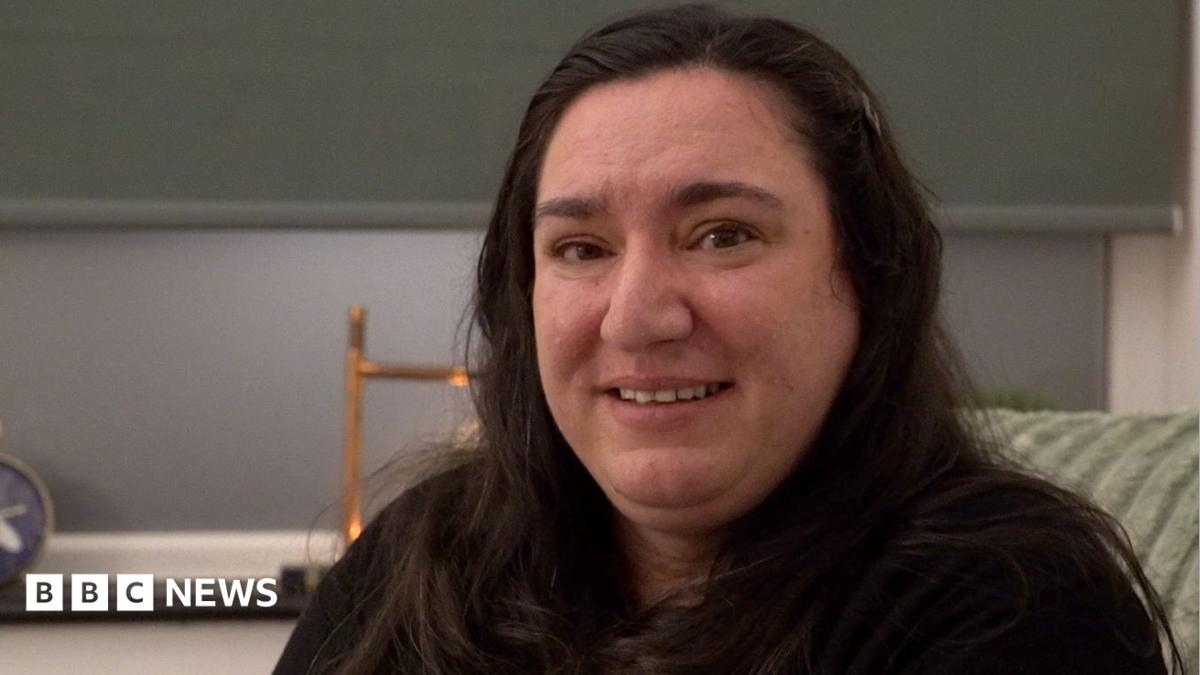
Image caption, Dawn said receiving a formal diagnosis transformed the way she thought about herself By Gill Dummigan North West health correspondent In the past 25 years, there has been a huge rise in the number of people seeking a diagnosis for autism or attention deficit hyperactivity disorder. More than 1,255,000 people in England are currently waiting for diagnosis or treatment for those conditions and wait times can be more than seven years. The NHS is now trying to steer more people away from a formal diagnosis and towards targeted help, which could be given much more quickly, but will that be enough for people who have spent years questioning why life seems so difficult?
For Dawn Cameron, school years were a tough time. The 43-year-old, from Wigan in Greater Manchester, said she was "seen as shy and odd and I was just really, really struggling with the school environment". She said her "biggest issues" came in multi-sensory environments, where there were "smells and noise [and] your senses are just overwhelmed".
"There wasn't any happiness whatsoever," she said. "I just felt so self-conscious about who I was." Over the years, she said she was told she had various mental health conditions, but at the age of 37, she went for an autism assessment and was diagnosed with the condition. She said it transformed the way she felt about herself.
"It was like 'oh, maybe all these things that I am, maybe aren't all these broken bits of me. Maybe I'm just one thing and it's not to be cured. It's the way I am'," she said.
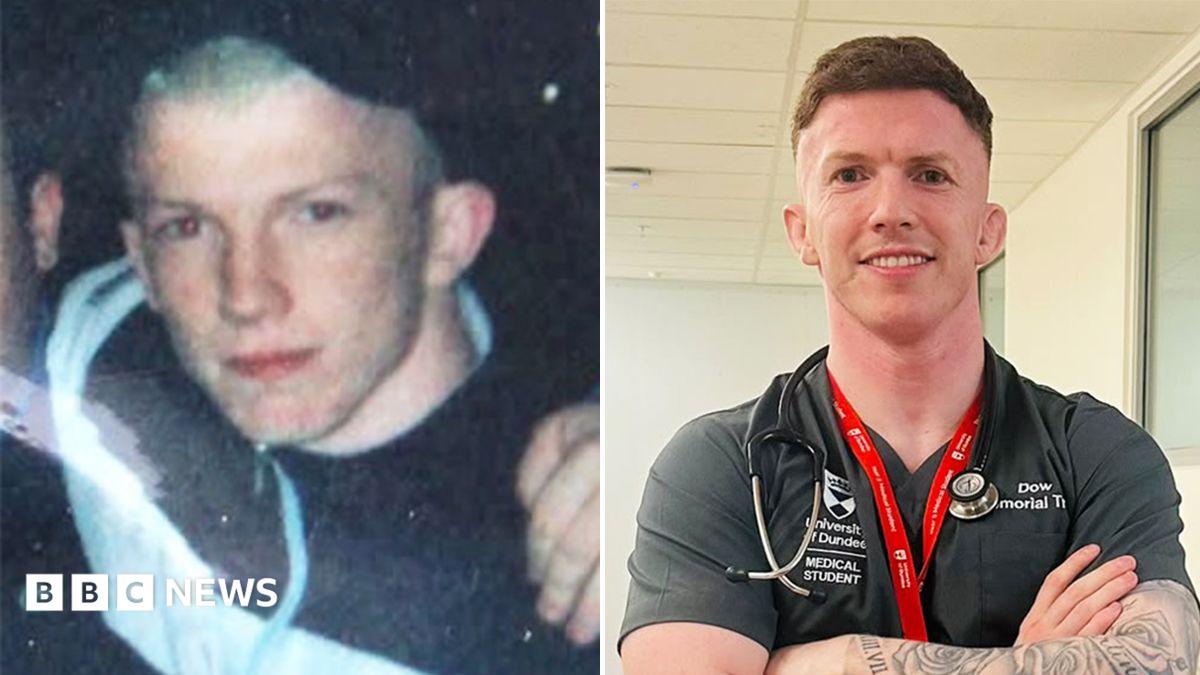
"That was life-changing for me." Image caption, Support groups aim to bring people together and break down barriers John Beattie, from Altrincham, said he struggled for years with undiagnosed ADHD. "There are days when I shouldn't really go out because I don't trust myself crossing the road," he said. "I'll forget to boil the kettle and pour cold water on my coffee or take a pan out of the oven without using a cloth so I'll burn my hand or forget to turn the oven off or forget to take the food out.
"These are the kinds of things that we have." Like Dawn, he said life was made even harder because he could not understand why this was happening. "I was trying to compare myself to everybody else all of the time. "Would that person do that?
Does that person do that? "But inevitably you get left feeling – no, they don't." 'Understanding your strengths' Prof Jonathan Green, who works in child and adolescent psychiatry at the University of Manchester, said there were a number of reasons why the conditions present. He said sometimes they were "passed down in families through a number of different genes... but for other conditions, the gene differences arise what we call de novo – out of the blue".
The impact of those differences vary hugely from person to person. Some people with autism may be non-verbal, or completely unable to regulate emotion, while others may struggle with social situations or dealing with a change in circumstances or plans. Both forms have a profound impact on an individual's happiness and ability to navigate life.
Image caption, Green said diagnosis and clinical care would always be necessary There is now a debate within the NHS and elsewhere on whether a formal diagnosis and support from healthcare professionals is the best way forward for everyone along this broad spectrum of experience. Although autism and ADHD have long been recognised as clinical disorders, the term "neurodivergence" was only coined in 2000, a time when the understanding of what constituted divergence from a theoretical "neurotypical" norm was changing and broadening. That change has seen a huge increase in demand for diagnoses.
A major Government-commissioned review , external published in October found monthly referrals in England for ADHD assessments had risen from about 5,000 in 2019 to about 17,000. Additionally, it found the proportion of 12 to 17-year-olds either waiting for an autism assessment or clinical help had risen from 0.1% in 2000 to 4.06% in 2025. The review, led by clinical psychologist Prof Peter Fonagy, said neurodivergent conditions had been underdiagnosed in the past, but that the current situation was now creating a risk of misdiagnosis and overdiagnosis.
However, it said the panel could not conclude that overdiagnosis was currently happening "at scale" and that much of the rise in assessment was down to increased public awareness of the conditions, driven by a combination of factors including reduced stigma and social media. It added that there was "little evidence of a substantial change in underlying population prevalence" for either condition and that none of its conclusions "should be taken to suggest that people's distress or difficulties are not real". "People are seeking answers and support for very real problems, and they are not the problem," it said.
"The problem is a system that leans too heavily on diagnosis as the route to help and cannot keep pace." Image caption, A range of support outside medical settings is becoming more available Green said diagnosis and clinical care would always be necessary. "There remains a substantial proportion of children, young people, adults with very significant needs," he said. "The needs of those people must remain very high in our minds as a health system to look after." He added that in many ways, the increase in awareness of neurodivergent traits had been a helpful one.
"This has become now an important way that people understand themselves," he said. "Sometimes this can be very helpful in terms of making meaning of your life and understanding your strengths [and] some of the difficulties, but it doesn't necessarily equate with what we talk about as a clinical condition. "On the other hand, as clinicians, we need to recognised that people do have these trait conditions that do affect them and we need to respond to that." 'Life is infinitely better' Three NHS organisations in north-west England are now piloting formal routes for helping children and young people which do not rely on a clinical diagnosis.
For adults, the process has so far been more limited and much of the support is still reliant on charities and other groups. My:ND Space CIC in Leigh is one of them. It was started two years ago by Ruth, who was herself diagnosed with autism and ADHD in adulthood and felt that there was no support available for people like her who are economically active.
"Services or groups meet during the day," she said. "For people who are in work... they can't access that support. "Therefore, that's a massive barrier straight away." Ruth's group meets in the evenings and at weekends, offering activities ranging from crafts and games to poetry sessions.
But the main emphasis is on talking and sharing experiences and advice. "It's about people being around other people who understand, who aren't judging them for the conversations that they have and sharing experience," she said. "There's this little magical moment where people feel seen and they feel validated and accepted".
Dawn goes to the group regularly. "It's just such a beautiful vibe in there," she said. "It's such a good environment.
"You feel that feeling of normalness – that normality." Image caption, Ruth runs a support group in the evening and at weekends to help those in work That feeling of being around others with similar experiences and outlook is a valuable one for people who have often spent decades wondering why they didn't "fit in". Peer support groups are being seen as a major part of this shift away from a sole reliance on diagnosis. But for many, the diagnosis itself is an important part of understanding what is happening.
Ruth, like Dawn, said she had spent years being told that her symptoms were down to other mental health conditions. "I was always being told 'you're anxious' or 'you've got OCD' or 'you might be depressed'," she said. "I felt like I was broken or there was something wrong or I was weird." She said her diagnosis allowed her to finally make sense of how she felt.
"It validates your experiences and helps me understand, and I can learn about it now," she said. John eventually paid for his own ADHD diagnosis after a three-year wait on the NHS. He too feels it was a turning point in understanding his condition.
"Life is infinitely better and I'm enjoying life for the first time in a long time," he said. "It's still hard but I can control it more. "The future's looking better" Prof Green said he agreed that a diagnosis was important for many, but something needed to be done to change a system which was overwhelmed and unable to help people effectively.
"Sitting on a waiting list is not going to help," he said. "It doesn't solve your problems and too many people in the population are having to do that at the moment." He said the piloted way of working "introduces a new pathway to care that can meet people's needs much more efficiently and quickly and proportionately", but he said that at the same time, any new system would have to be properly implemented. "Just warm words aren't enough," he said.
"We need real practical structural change in society. "It's never going to be perfect because life isn't perfect. "But we can make it easier." Get in touch Tell us which stories we should cover in Greater Manchester
Source: BBC