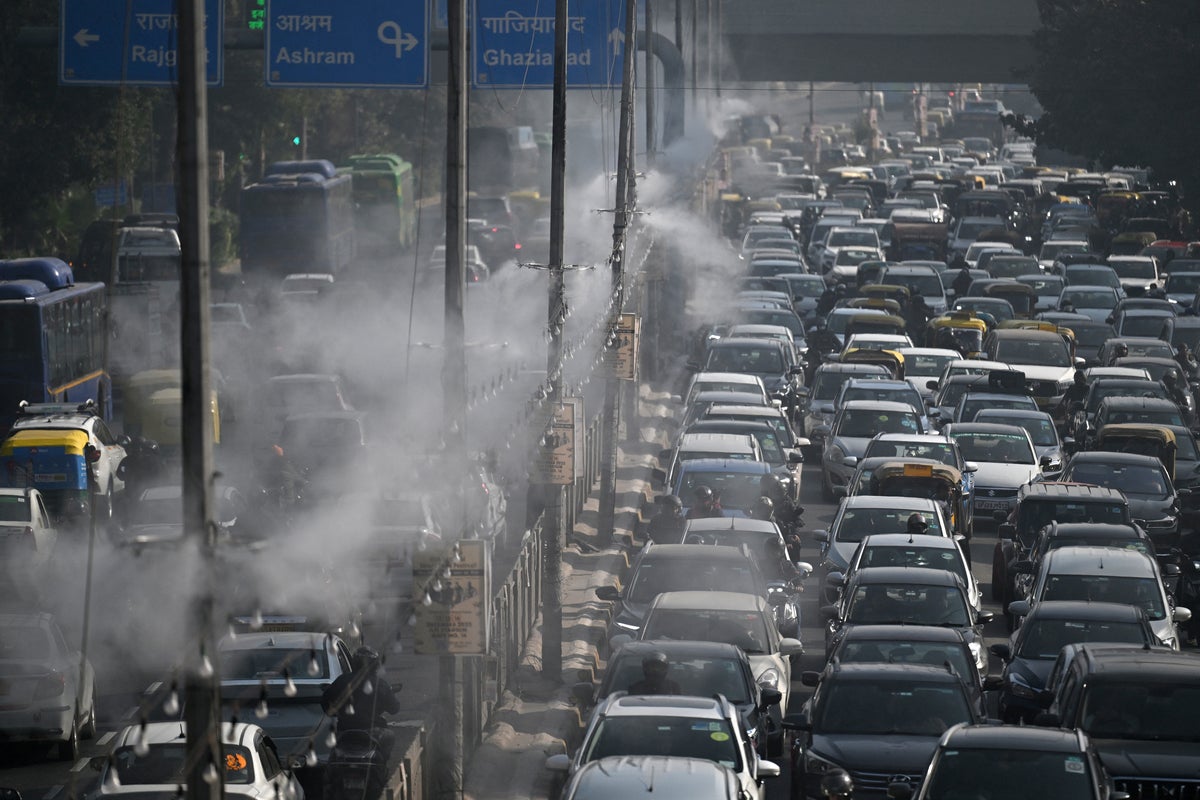
Exposure to air pollution from traffic and fossil fuels could increase the risk of death by suicide, according to a new study that pooled data from dozens of studies conducted around the world. Researchers at Queen's University Belfast combined data from 29 studies to examine whether pollutants, including fine particulate matter and nitrogen dioxide, were linked to suicide risk. The study found that both short-term and long-term exposure to PM2.5, tiny airborne particles mainly produced by traffic and the burning of fossil fuels, were linked to significantly greater odds of death by suicide, attempted suicide and suicidal thoughts.
Short-term exposure to PM10, a larger particulate pollutant, and long-term exposure to nitrogen dioxide were also linked to increased risk, while a broader review of existing literature suggested possible links to other pollutants , including sulphur dioxide and ozone, and to noise pollution. The findings are published in the Journal of Epidemiology & Community Health . More than 720,000 people die by suicide worldwide each year but the true figure is thought to be higher due to underreporting.
The WHO has set a goal of cutting the global suicide rate by a third between 2013 and 2030. “These findings bring to attention the critical importance of recognising environmental exposures as modifiable risk factors within suicide prevention efforts," the study noted. “Integrating environmental health into mental health policy, through cross-sectoral collaboration, pollution reduction strategies, and targeted public health interventions, could play a vital role in reducing suicide risk and improving overall population mental wellbeing." A woman carries a sack of garbage beside burning plastic wastage (Getty) The researchers noted that air pollutants had previously been associated with chronic inflammation and damage to the nervous system, which could impair brain function and affect mood, while traffic and other environmental noise could raise stress levels by disrupting the body's natural sleep-wake cycle.
Water pollution and noise pollution showed potential links in the wider literature review, though the evidence for water and light pollution was too limited or inconsistent to draw firm conclusions. Experts who weren’t associated with the study said the findings were an important contribution, but urged caution in how they were interpreted. Alexander Larcombe, associate professor at Curtin University's School of Population Health, said the results more likely reflected the fact that polluted areas tended to be more disadvantaged, with higher unemployment, social isolation, and poorer access to mental health care, all of which independently raise suicide risk.
"This hypothesis is biologically reasonable, but this study can't yet establish that pollution causes suicide," he said. Dr Rosie Cornish, a senior research fellow in epidemiology and health data science at the University of Bristol, also noted that the study had not accounted for the many other conditions that tend to be present in more polluted areas. "There are many factors that are associated with higher levels of air pollution as well as increased risk of suicide that could potentially explain these observed associations," she said, citing socio-economic deprivation, access to green space, housing quality and differences in lifestyle between urban and rural living.
Dr Jon Van Niekerk, chair of the Royal College of Psychiatrists' general adult faculty, said the review added usefully to an emerging field but stopped well short of establishing cause and effect. "This is a useful systematic review of an emerging area of research and adds to evidence suggesting that exposure to some forms of air pollution may be associated with a small increase in suicidal behaviour at population level," he said. "However, it is important to be mindful that most of the underlying evidence is observational, and so this study cannot establish that air pollution itself causes suicidal thoughts or attempts." If you are experiencing feelings of distress, or are struggling to cope, you can speak to the Samaritans, in confidence, on 116 123 (UK and ROI) or visit the Samaritans website to find details of your nearest branch.
If you are based in the USA, and you or someone you know needs mental health assistance right now, call or text 988, or visit 988lifeline.org to access online chat from the 988 Suicide and Crisis Lifeline. This is a free, confidential crisis hotline that is available to everyone 24 hours a day, seven days a week. If you are in another country, you can go to www.befrienders.org to find a helpline near you
Source: The Independent